


- EN
- JP


The tatara ironmaking process involved carving into mountains to mine iron sand and felling trees to make charcoal.
The scale of this activity was so vast that it reshaped the very topography of the mountains and rivers.
Yet, as they harvested the land, the people planted trees to sustain the cycle of life, and transformed the excavated slopes into terraced rice fields, creating a prosperous rural community.
The spirit of the Japanese people, who faced both the bountiful and harsh forces of nature, still lives on in the tatara heartland today.

Trees from the forest provided the heat source that powered tatara ironmaking.
Because the process required vast amounts of wood, the tatara-operating Tanabe family became known as the “Forest Kings” for owning the largest forest holdings in all Japan.
Saplings were planted on mountains where trees had been cut down, maintaining a forest regeneration cycle of roughly 30 years. Furthermore, the slopes stripped of iron sand were turned into terraced rice fields, creating a prosperous rural community.
Even today, delicious rice is still grown there.
A journey through this landscape, deeply marked by the history of tatara, is the first step toward understanding the very foundations of Japanese craftsmanship.


A space brought to life by repurposing the traditional longhouses where the staff of the Tanabe family, one of the nation’s leading tatara operators, once lived.
The wooden longhouses were renovated using wood and earth, preserving the nostalgic, historic atmosphere.
Wood, earth, and wind. Tatara ironmaking was a process crafted from nothing but natural materials and human strength.
We invite you to spend time reflecting on the lifestyle and craftsmanship of the past, while surrounded by the natural elements that define tatara.

We serve a nourishing breakfast using seasonal ingredients including Chugoku mountain delicacies and seafood from the Sea of Japan.
It’s the perfect start to a healthy day.
We offer a variety of activities that allow you to experience the local history and culture.
Through personal encounters with the local community, you’ll gain a deeper understanding of this land and its way of life.


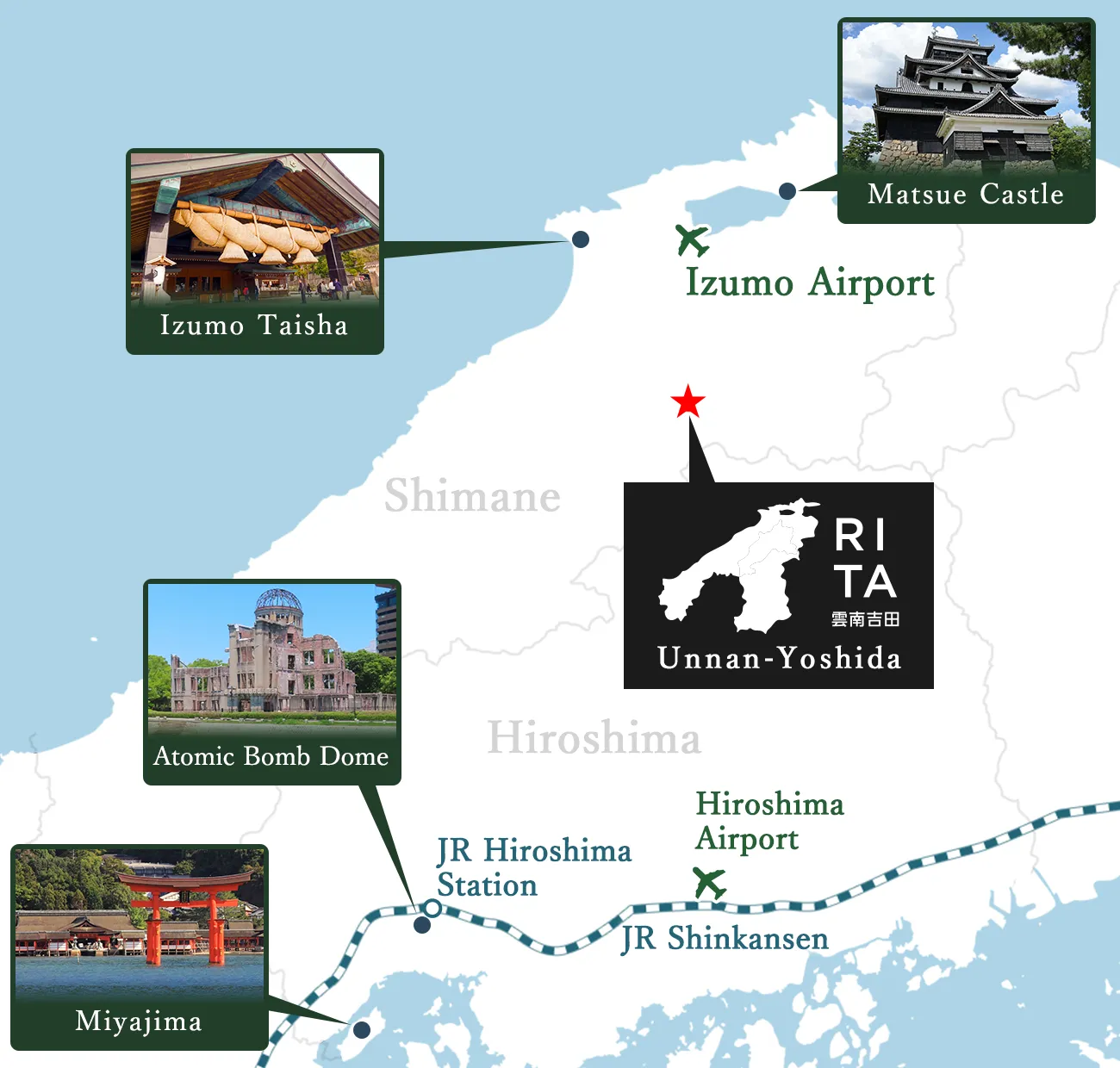
Approx. 35 min by car from Izumo Enmusubi Airport.
By plane
By public transportation

We charge the following cancellation fees.


© RITA UNNAN YOSHIDA


